

07 Sep Dental Implants vs Bridges vs Dentures: Which Tooth Replacement Option Is Right for You?
Dental Implants vs Bridges vs Dentures: Which Tooth Replacement Option Is Right for You?
Choosing between dental implants vs bridges vs dentures depends on how many teeth are missing, the health of your remaining teeth, bone levels, maintenance preferences and whether you want a fixed or removable option.
Implants often provide the greatest stability, bridges can offer a fixed alternative without implant surgery, and dentures can be practical where several or all teeth are missing. The best choice depends on your individual clinical situation.
Dental Implants vs Bridges vs Dentures: The Short Answer
Dental implants are placed into the jawbone and can support a crown, bridge or denture. Bridges replace missing teeth using neighbouring teeth for support. Dentures are removable appliances used to replace several or all missing teeth.
There is no single option that is right for everyone. Suitability depends on your oral health, remaining teeth, bone availability, priorities and treatment preferences.
Dental Implants vs Bridges vs Dentures at a Glance
| Factor | Dental Implants | Bridges | Dentures |
|---|---|---|---|
| Fixed or removable? | Usually fixed | Fixed | Usually removable |
| Suitable for | One, several or all missing teeth | One or several missing teeth | Several or all missing teeth |
| Support | Jawbone | Adjacent teeth | Gums and remaining teeth |
| Effect on neighbouring teeth | Usually independent | Often relies on adjacent teeth | Usually no preparation needed |
| Stability | High once integrated | Fixed and stable | Can vary |
| Cleaning | Careful daily hygiene | Cleaning beneath and around bridge | Removed and cleaned regularly |
| Treatment time | Usually longest | Often shorter | Usually simpler |
| Bone requirements | Adequate bone needed | Not implant-dependent | Not implant-dependent |
This table is useful for comparison, but a clinical assessment is still needed before deciding.
When Dental Implants May Suit You
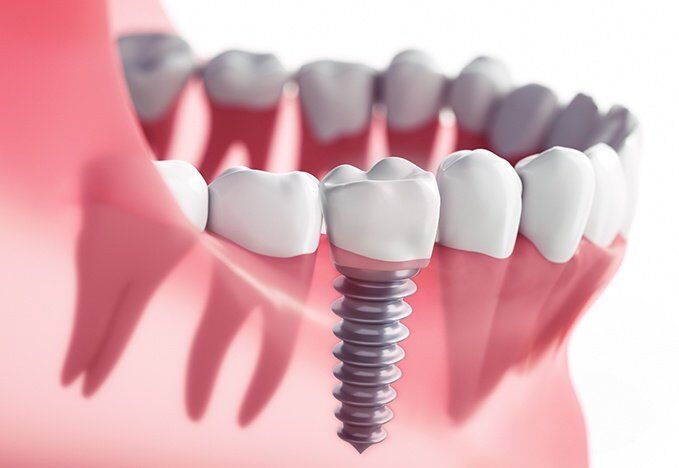
A dental implant acts as an artificial tooth root and supports a restoration above the gumline.
A single tooth implant can replace one missing tooth without relying on neighbouring teeth. Multiple dental implants may support a bridge where several teeth are missing.
Implants can be attractive if you want a fixed option and have suitable gum and bone health. If bone volume is limited, bone grafting may sometimes be considered before implant placement.
For a broader overview, see the practice’s dental implants page and dental implant guide.
When a Bridge May Be More Appropriate
A bridge replaces a missing tooth or teeth by using neighbouring teeth for support.
Because it is fixed, it can provide good stability without implant surgery. It may be particularly suitable where the adjacent teeth already need crowns or restorative work.
The main consideration is that the supporting teeth must be healthy enough to carry the bridge, and some types require those teeth to be prepared.
Read more about dental bridges and wider general dentistry.
When Dentures May Be the Practical Choice
Dentures remain a useful option for replacing several or all missing teeth.
They may suit patients who:
- Prefer a removable solution
- Are missing many teeth
- Want to avoid implant surgery
- Do not have sufficient bone for implants
- Need an option that does not rely on neighbouring teeth
The main difference is stability. Conventional dentures rest on the gums and may move more than fixed restorations.
Patients who want improved retention can also explore implant-supported dentures.
You can also learn more about conventional dentures.

How the Options Compare for Comfort & Function
Implants and bridges are fixed, so they generally feel more stable during eating and speaking.
Dentures can also restore function, but adaptation is often needed, especially when they are first fitted. Fit may also change over time as the mouth changes.
Whichever option you choose, comfort depends on good fit, healthy gums and regular maintenance.
What About Cleaning & Maintenance?
None of these options are maintenance-free.
Implants require careful cleaning around the restoration and gumline. Bridges need cleaning around the supporting teeth and underneath the replacement tooth. Dentures should be removed and cleaned regularly.
Ongoing dental hygiene appointments can help protect both restorations and the surrounding tissues.
How Long Does Treatment Take?
Implants usually take the longest because healing is required after placement. Treatment can take longer if bone grafting or other preparation is needed.
Bridges are often completed more quickly because there is no implant healing stage.
Dentures usually involve impressions, fitting stages and adjustment appointments, but do not require surgical integration.
For more detail on implants, see the dental implant journey.
What Should You Consider About Cost?
Cost varies depending on the number of teeth being replaced, complexity, materials and whether additional procedures are required.
Implants usually involve more clinical stages than conventional bridges or dentures, while extensive cases may involve additional planning.
Initial cost should not be the only consideration. Future maintenance, repairs and replacement may also affect long-term value.
Five Questions to Ask Before Choosing
Before deciding, consider:
- 1How many teeth need replacing?
- 2Are the neighbouring teeth healthy?
- 3Is there enough bone for implants?
- 4Do you prefer a fixed or removable option?
- 5What level of maintenance are you comfortable with?
These questions often make the choice clearer.
Frequently Asked Questions
Not always. Implants do not usually rely on neighbouring teeth, while bridges can be an excellent fixed option where suitable support is available.
Longevity varies according to oral health, hygiene, bite, materials and maintenance. No restoration should be considered maintenance-free.
Conventional dentures usually involve fewer surgical and restorative stages, so the initial cost may be lower. Exact costs depend on the case.
Yes. A bridge or removable partial denture may also be suitable depending on the condition of the teeth around the gap.
Not everyone does. It is only considered when there is not enough suitable bone to support the planned implant.
A clinical assessment is the best way to decide. Your dentist can compare your teeth, gums, bone levels, bite and personal preferences before explaining the suitable options.
Sorry, the comment form is closed at this time.